
What Is Cowarehousing? The Definitive Guide (And Why It Started in Raleigh)
Cowarehousing didn't start as a business plan. It started as a problem one founder couldn't solve any other way, and it started right here.
Key takeaways
Cowarehousing is a shared, flexible warehouse model: private units, shared equipment, no long-term lease, no personal guarantee.
It was pioneered in 2016 in Raleigh, NC by Philip Freeman, founder of Murphy's Naturals, to our knowledge the first cowarehousing model in the U.S.
It's different from a storage unit (it's a working operational space) and different from a traditional warehouse lease (it's flexible, all-inclusive, and shared).
It's no longer just for e-commerce, construction, manufacturing, kitting and fulfillment, and dozens of other industries now use cowarehousing as their logistics home base.
The short answer
Cowarehousing is a flexible, shared warehouse model that gives small and growing businesses access to storage, shipping and receiving, and logistics support, without the long-term lease, the personal guarantee, or the overhead of running a warehouse alone. Members lease their own private cowarehouse unit, sized to what they actually need, and share the equipment, staff, and infrastructure that would otherwise cost far more to build and manage on their own.
Think of it as coworking's operational sibling: same idea of flexible, shared, professionally managed space, just built for pallets and product instead of desks and laptops. Some people call it cowarehousing, shared warehouse space, or flex industrial space; it's the same model.
Where cowarehousing actually started
Most industries don't get to point to one person and one moment. Cowarehousing does.
In 2013, Philip Freeman started Murphy's Naturals out of his garage, natural mosquito repellent products, born out of a fairly simple problem (his wife Pam is what he calls a "mosquito magnet"). As the company grew, Philip did what most founders do: he signed a lease for warehouse space. He outgrew it within six months. What followed was the part every product-based founder recognizes: bouncing between subleased warehouses and storage units, trying to scale a real operation inside spaces that were never built to flex with him.
When Philip finally found the building that's now known as Dock 1053 in Raleigh, he leased more space than Murphy's Naturals needed at the time, on purpose. Instead of sitting on the extra square footage, he opened it up to other small businesses facing the exact same problem he'd just lived through: not enough capital for a long-term lease, not enough volume to justify a full warehouse, and not enough time to manage one on top of running a company.
That decision, in 2016, became The Loading Dock, and cowarehousing as a service offering. To our knowledge, Philip was the first person in the United States to develop the concept.
He didn't build it because he saw a market opportunity. He built it because he needed it, and figured other founders did too. That's still the model today.

How cowarehousing is different from a traditional warehouse lease
A traditional industrial lease is built for certainty: a fixed footprint, a multi-year term, and, in most cases, a personal guarantee that puts the founder's own assets on the line. That works fine for a company with predictable, stable volume. It works against nearly everyone else.
Cowarehousing at The Loading Dock flips the structure:
Short-term commitments instead of multi-year leases (six to twelve months is standard)
No personal guarantee required to get started
All-inclusive pricing, utilities, maintenance, internet, and security bundled into one monthly rate instead of a dozen separate line items
Space that scales with you, expand into more square footage as inventory grows, without breaking a lease or moving buildings
Shared equipment and staff, pallet jacks, dock access, daily shipping and receiving, and an onsite team, instead of buying and managing all of it yourself
How cowarehousing is different from a storage unit
This is the mix-up we hear most often, so it's worth saying plainly: a storage unit holds things you're not actively using. Cowarehousing is a working space, inventory moves in and out constantly, orders get picked and shipped daily, and the facility is built for business operations, not for things you're trying to forget about in a spare room. You get dock access, shared equipment, and daily shipping and receiving support that a self-storage unit was never designed to offer.
Who cowarehousing is actually built for
Cowarehousing started with one CPG founder's warehousing problem, but it hasn't stayed there. We've watched the model stretch to fit an increasingly wide range of businesses, e-commerce brands, construction and trades companies, light manufacturers, kitting and fulfillment operations, and plenty of businesses that don't fit neatly into any of those categories at all. (More on exactly who's using cowarehousing, and how differently they're all using it, in the next article in this series.)
What's actually included
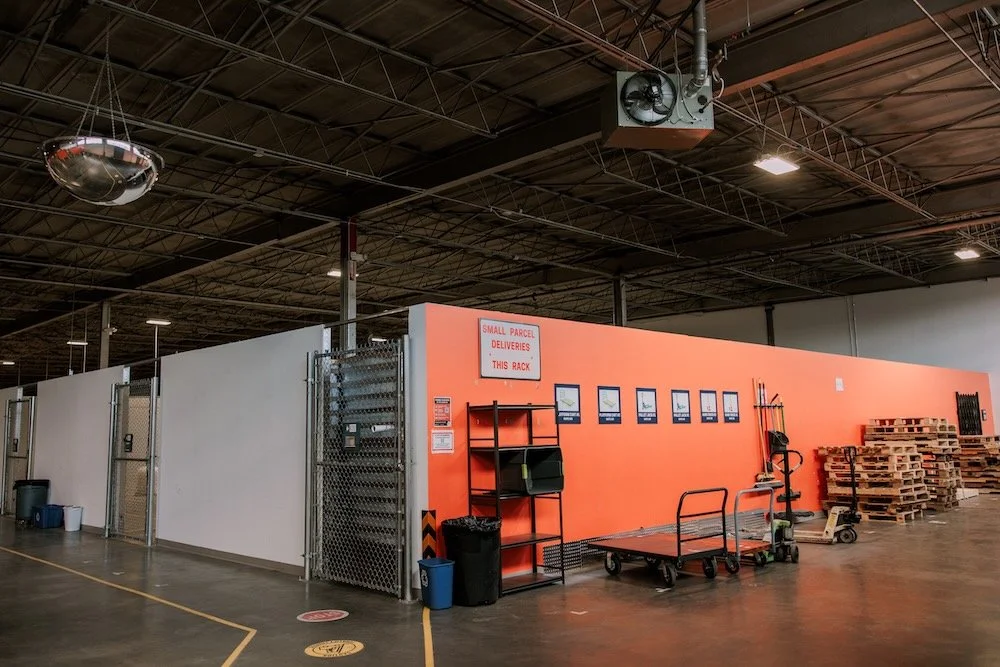
At The Loading Dock, a cowarehouse membership isn't just a unit with four walls. It comes with:
A private, secured warehouse unit sized to your business (not a one-size-fits-all footprint)
Daily onsite shipping and receiving
Shared equipment, pallet jacks, dollies, and loading dock access
24/7 secure access
Internet infrastructure built for logistics, not an afterthought
Access to coworking space and meeting rooms for the front-of-office side of the business
A community of nearly 1,300 members across industries who are dealing with the same growing pains you are
Frequently asked questions
What is cowarehousing? Cowarehousing is a shared warehouse model where multiple businesses lease their own private storage and logistics space within one facility, splitting access to shared equipment, staff, and infrastructure like loading docks and shipping support. It gives small and growing businesses warehouse capability without the cost and risk of a traditional industrial lease.
Who invented cowarehousing? Philip Freeman, founder and CEO of Murphy's Naturals, is credited, to our knowledge, as the first person in the United States to develop the cowarehousing concept. He created it in 2016 in Raleigh, North Carolina, after experiencing firsthand how difficult it was to scale a product-based business within rigid, long-term warehouse leases.
Where did cowarehousing start? Cowarehousing started at The Loading Dock's flagship Dock 1053 campus in Raleigh, North Carolina, when founder Philip Freeman opened up extra warehouse space he'd leased for his own company, Murphy's Naturals, to other small businesses facing the same scaling challenges.
How is cowarehousing different from traditional warehousing? Traditional warehousing typically requires a multi-year lease, a personal guarantee, and full responsibility for managing utilities, equipment, staffing, and maintenance. Cowarehousing offers short-term, flexible agreements, no personal guarantee, all-inclusive pricing, and shared equipment and staff, so businesses get warehouse capability without taking on a second full-time job managing a facility.
Is cowarehousing only for e-commerce businesses? No. While e-commerce was one of the earliest and most visible use cases, cowarehousing today serves a much broader range of businesses, including construction and trades companies, light manufacturers, kitting and fulfillment operations, and product-based businesses across many industries.
Do cowarehousing agreements require a personal guarantee? At The Loading Dock, no. Members can access cowarehousing space without personally guaranteeing the lease, one of the biggest structural differences from a traditional commercial warehouse lease.
How much space do you need for cowarehousing? Cowarehouse units are sized to the business, not the other way around, ranging from smaller units for early-stage companies up to larger footprints for established operations, with the ability to expand as inventory and order volume grow.
Is cowarehousing the same as coworking? They're built on the same idea, flexible, shared, professionally managed space instead of a rigid long-term lease, but coworking is designed for desks and office work, while cowarehousing is designed for inventory, shipping, and logistics. Many cowarehouse members use both: warehouse space for the product, coworking space for the team.
Cowarehousing wasn't built in a boardroom. It was built by a founder who got stuck, found a way out, and decided to bring other people with him.
If your business has outgrown the garage, or the storage unit, or the sublease that was never quite right, cowarehousing might be the space that finally fits. Explore cowarehousing at The Loading Dock or book a tour to see it in person.
Slash your overhead, not your standards.